
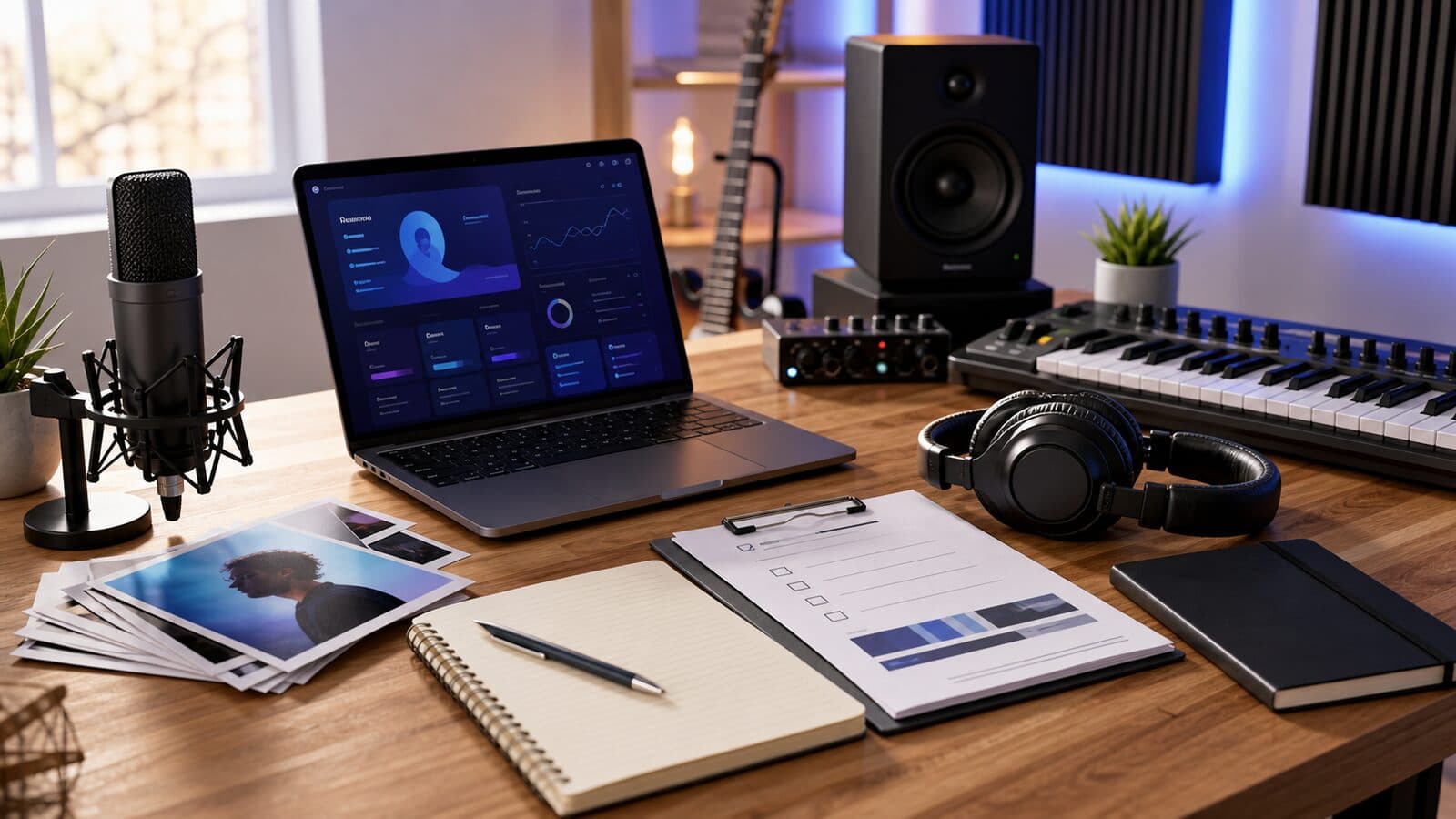
An artist EPK should make your project easy to understand quickly.
For independent artists, an electronic press kit does not need to be complicated. It needs to answer the basic questions before a playlist contact, blog editor, booker, collaborator, or Music Mentor has to ask them.
Use this short checklist before you pitch a release, meeting, show, or feedback conversation.
1. Start with one sentence
Open with a clear artist description.
Who are you, what does the music feel like, and why does this project matter now? Keep it direct. A useful EPK is not trying to sound bigger than the artist. It is trying to make the direction legible.
2. Add the music links
Include the music someone should hear first.
That can be a current single, a private demo link, a recent video, or a short playlist of priority tracks. Put the strongest link first and explain whether the track is released, unreleased, rough, or final.
3. Keep photos practical
Use a few clean press photos that match the world around the music.
Include horizontal and vertical options, make sure the files are easy to download, and avoid burying the useful images inside a folder with dozens of near-duplicates.
4. Show proof without overselling
Add fan and career signals that are real.
That might include saves, repeat listeners, strong comments, playlist adds, social clips that traveled, live-show moments, press mentions, or collaborators who keep returning. The goal is not to inflate the story. The goal is to show momentum clearly.
5. Include credits and contact details
Make the basics easy to find: artist name, location, release date, song credits, collaborators, producer, mixer, masterer, artwork credit, manager or team contact, and public links.
Clean credits help people understand the record and avoid confusion later.
6. Name the next ask
Do not make someone guess why you sent the EPK.
Are you asking for feedback, coverage, booking, playlist consideration, a meeting, or help shaping the next release? A clear ask makes the pitch easier to answer.
A fill-in EPK outline
Use this outline as a starting point, then shorten it for the person receiving it. Leave out any claim you cannot support.
- Artist: [artist name, location, one-sentence musical direction].
- Current release: [title, release date or stage, one sentence about the song].
- Listen first: [one priority link, followed by one optional live or video link].
- Short bio: [your sound, relevant background, and what you are doing now].
- Press assets: [download links for selected photos and artwork, with photographer and designer credits].
- Evidence: [a relevant achievement or audience signal, its date, and a source; omit this section if there is nothing useful yet].
- Credits: [songwriters, performers, producer, mixer, mastering engineer, and other relevant collaborators].
- The request: [coverage, a show, a conversation, or feedback; explain why this recipient fits].
- Contact: [the right person, working email, and official artist profiles].
Check it before you send it
- Open every listening and download link while signed out. Check permissions without making private tracks public unnecessarily.
- Read the EPK on a phone. The priority track and contact should be easy to find.
- Confirm names, dates, credits, image permissions, and any numbers against your records.
- Remove expired links, duplicate files, unsupported claims, and personal information the recipient does not need.
- Match the request to the recipient. A booker needs different context from someone reviewing a demo.
Send one maintained EPK link when practical, and keep your own copy of what was shared. Update it when the release or contact changes.
Where Incurator fits
Incurator helps artists organize Artist DNA, release context, career signals, and next actions so the story around the music is easier to share.
If you are preparing a release, pair this EPK checklist with our music release checklist. If your work starts showing strong momentum, the merit-based Music Funnel is designed to help Incurator understand your trajectory and, when selected, connect artists with Music Mentors.
A good EPK is not a brag sheet. It is a clear map of the music, the context, and the next move.
Put this into practice
Your next step: prepare the release checklist; organize your AI career tools. Explore our music marketing tools for the relevant Incurator workflows.